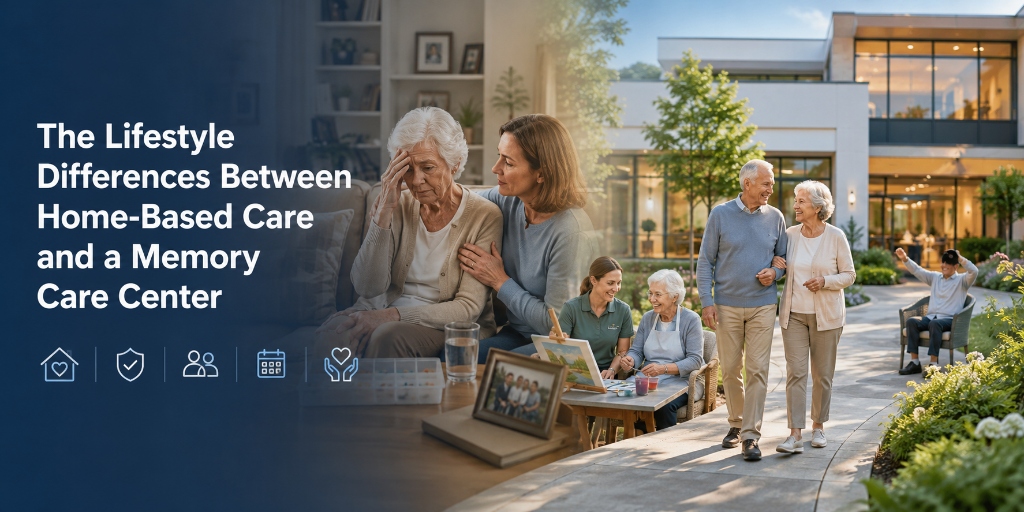
Diagnosing a loved one with memory loss can be difficult for family members to accept. Families often face this dilemma: either choose home-based care with hired help for them, or have the loved one move into senior living facilities in Cameron Park built specifically for memory care. Both options aim to provide the best possible care of the patient, but the day experiences they offer are very different.
The blog explains the lifestyle differences between home-based care and memory care centers to help families make an informed decision.
Home-Based Care
Familiarity can be genuinely comforting for people suffering from the early stages of memory decline. However, home care often relies on either an exhausted family member managing everything or the difficulty of finding a reliable and trusted hired helper. When it's just the family members taking care of the patient, it becomes hard to maintain structure.
Meals, activities, and supervision depend on who is on shift that day and on safety modifications. Socialization can shrink to almost nothing since leaving the house becomes harder and visitors taper off over time.
Caregiving is highly personalized and delivered on a one-to-one basis. However, physical home environments often need to be modified to prevent falls or wandering and consistent 24/7 monitoring, which can be difficult for family members. Tough, there is independence where the individual maintains a high level of autonomy. They dictate their own daily schedule, meal choices, and personal habits.
Memory Care Center in Cameron Park
At a memory care community, the residents' entire day follows a predictable rhythm, including meals, gentle exercise, music, art, and rest. A fixed schedule reduces the anxiety that unstructured time can cause. Trained staff are present around the clock to be there with residents during confusion, wandering, and agitation.
Communities like a memory care center in Cameron Park are built thoughtfully by prioritizing the residents' utmost safety. The community is designed with secured courtyards, color-coded hallways, and layouts that reduce disorientation rather than reinforce it. To ensure the residents don't feel isolated, they're surrounded by peers going through similar changes, along with staff who know their history, preferences, and quirks.
Conclusion
Home care can work well at an early stage with the right support system, but as needs grow, the gaps in home-based care tend to increase. When a patient suffering from memory loss is shifted to a trusted memory care center like Blissful Gardens Care, they get a home-like setting with the structure, safety, and connection that memory loss eventually requires.